Last Updated on May 12, 2026 by admin
What This Is
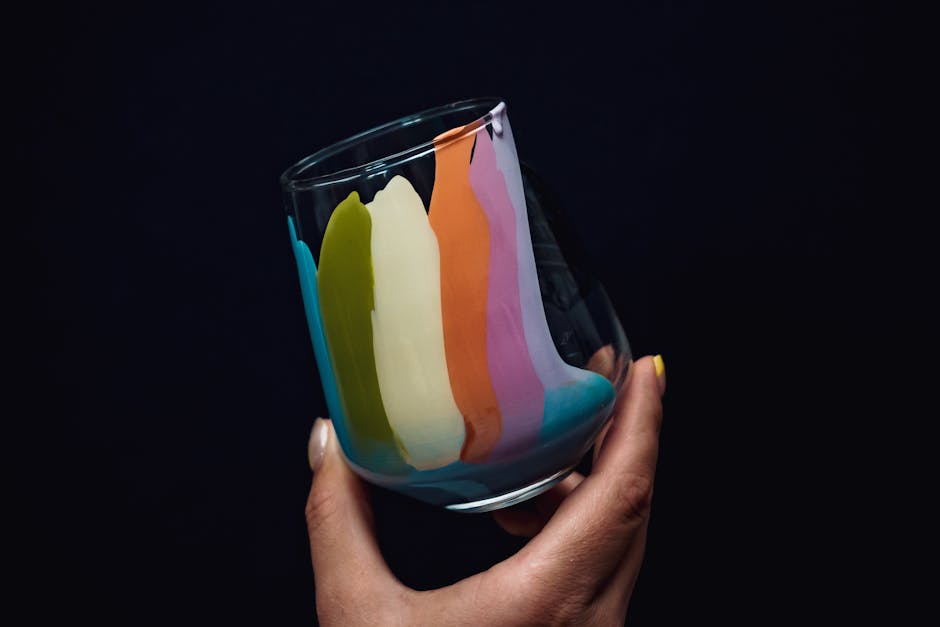
Guests use a printed template slipped inside a small glass jar to trace a simple design onto the outside of the glass using black Gallery Glass leading paint, then fill each panel with FolkArt or Pebeo Vitrea transparent glass paint. The result looks like a real stained-glass piece — it glows when backlit by a tea light. Most shops run this in 20-to-25-minute windows, and it lands well with adults 18 and up, plus teens. Zero art background required.
Supplies You Need to Set Up the Station
Per guest:
- One 12-ounce straight-sided glass jar (wide mouth mason jars work perfectly)
- One laminated template insert (rolled to fit inside the jar)
- Gallery Glass Leading (black, the 2-oz squeeze bottle)
- FolkArt Enamels or Pebeo Vitrea 160 transparent glass paint, 4-6 colors per station
- Two or three small foam brushes or rounded detail brushes
- Paper towels and a small cup of rubbing alcohol for wipe-ups
Station setup:
- Rubber bands or binder clips to hold templates inside jars while guests work
- A lazy Susan or small turntable so guests can rotate their jar without touching the wet leading
- Wax paper sheets to rest jars on during drying
- One battery-powered tea light per station (so guests can preview the glow effect before it's dry)
The lazy Susan is the one thing most shops skip, and it genuinely changes how smoothly the station runs.
Optional:
- Kraft paper bags with tissue for carrying finished jars home safely
- A completed sample votive lit from inside, displayed at eye level
How to Create Trace-Ready Design Templates Guests Can Follow
This is the part that looks complicated but takes about 30 minutes of prep, once, before the event opens.
- Choose 2-3 simple geometric or nature-based designs. Think: a sunflower with 8 petals, a simple dragonfly, a cluster of 4-5 leaves. Avoid anything with lines closer than half an inch together — the leading needs room.
- Size each design so it wraps around the jar's circumference with about a half-inch overlap. For a standard 12-ounce mason jar, that's roughly 11.5 inches wide by 3.5 inches tall.
- Print designs on regular copy paper, then laminate them. Lamination keeps the paper from absorbing condensation if the room is warm and humid — and craft-fair venues often are.
- Roll each laminated template and slide it inside the jar, printed side facing out. Secure with a rubber band stretched over the jar mouth so it doesn't shift mid-trace.
- Set out one pre-assembled jar per station so guests can see exactly what they're starting with. I leave a second one half-finished as a reference — it answers about 80% of questions before guests even ask.
For designs, Canva's free shapes library gets the job done fast. Export at 300 dpi, print, done.
Setup — Running the Station
- Lay wax paper across your table surface. It protects the table and gives guests a clean place to set their jar between steps.
- Pre-assemble all template jars before the shop opens. Don't leave this for when the line is moving.
- Set out leading paint bottles with the tips already opened and tested. Cold leading comes out unevenly — if your shop runs under 65°F in winter, warm the bottles in a shallow tray of warm water for 10 minutes before the event starts.
- Arrange paint colors in the center of the table where 2-3 guests can reach them. I usually set out 6 colors max — more than that and guests spend 10 minutes just choosing.
- Place one battery tea light under a finished sample jar at the station entrance. That visual sells the experience before anyone reads a single sign.
- Post a simple 4-step instruction card at each seat, laminated. Verbal instructions help, but guests get distracted and forget step 2 by the time they've finished step 1.
Walk-Through for Guests
- Guests sit down, pick up the pre-assembled jar, and choose their color palette — 3 to 4 colors is the sweet spot.
- They trace the design lines they can see through the glass using the leading paint bottle, following the black outlines printed on the template inside. Slow, steady pressure. The tip of the bottle is the brush. Most guests find their rhythm after the first 2 or 3 lines.
- Leading needs about 5 minutes to skin over before painting. This is a natural break — guests can grab a stamp, look at your shop's products, or just watch their neighbor work. Good moment for social sharing. Encourage them to snap a photo of the leading-only stage; it photographs beautifully against a light background.
- Once the leading has a slight matte surface (not shiny-wet), guests pick up a foam brush and fill each panel with a single color of transparent paint. One coat is usually enough. The paint spreads easily and you don't need to stay perfectly inside the lines — leading covers any edge bleed.
- Slip the template out from inside the jar, hold it up to the battery tea light, and that's the moment. It glows. Guests always react. That's your photo opportunity — have a simple white card or a bright window nearby so the light transmission shows up in phone photos.
Tips & Variations
- The leading is the failure point, not the painting. Guests who squeeze too fast get blobs instead of lines. A quick 30-second demo at the start of each group prevents 90% of the mess.
- Keep rubbing alcohol and cotton swabs at every seat. Mistakes in the leading stage wipe off clean in the first 60 seconds — after that, it's permanent. Tell guests this upfront.
- For a winter holiday version, swap the standard designs for snowflakes or simple stars. Four-pointed stars are faster to trace than six — worth knowing when your line is 8 people deep.
- I always run a "light test" display at the exit: a small shelf with a strip of LED lights underneath where guests place their finished jar on the way out. It's the last thing they see before they leave the shop, and it's the photo that ends up on Instagram.
- If you want a lower-commitment entry point, a decoupage mason jar lantern station uses the same jar format with even less setup time — worth knowing if this feels like too much for day one.
- Pebeo Vitrea 160 is oven-curable at 325°F for 40 minutes, which makes the design dishwasher-safe. Mention this to guests. It's a detail that genuinely surprises people and elevates the perceived value of what they made.
Why Customers Come Back for This
The glow. Seriously, that's it. Guests don't expect a $20-range craft activity to produce something that looks like it came from a boutique home goods store — and when they hold that lit jar up for the first time, the reaction is instant. They tell their friends, and their friends come looking for the experience.